Tech isn’t boring. Tell better stories.
December 15, 2025•7 mins read
Toma Sabaliauskienė, CMO at NordVPN
Have you ever heard the phrase “oh, our tech is too complicated for creative marketing”? What about “we are not a cola company”, or “there’s nothing to be done, it’s a B2B product”? Recently, a new kind of phrase started to make the rounds – “just add AI somewhere, it will be enough”.
Those kinds of whispers haunt marketing departments anywhere on the globe. There seems to be a marketing myth – coming from non-marketers – that unless you are selling sneakers, soft drinks or candy, you are destined to communicate in bullet points, white papers, and technical specifications.
That’s simply not true. There is no such thing as a boring product. Especially tech products. But there are boring stories.
In this new AI era, where LLMs can generate generic landing page copy in seconds, and anyone can vibe code the entire website without much input, this problem became even more apparent. But some tech brands take this problem as an opportunity and choose to be daring, authentic, and surprisingly entertaining. Even if some are selling utility, they choose to flip the script: selling not software or services but relief, humor, and understanding.
Here are a few examples that prove “boring” is just a state of mind – and how you can apply these lessons to your own strategy.
Finding humor in the corporate work
Project management software is the definition of essential but uncool. Yet, Atlassian managed to make Jira the center of a genuinely funny campaign. By partnering with actor Zach Woods (known for those who are fans of Silicon Valley series), they didn’t just demo features; they satirized the very real confusion and ambition of the tech world.
In their “The Contract” ad, Woods plays a character who thinks he’s about to get rich from “performance marketing” without understanding what it means – until Jira brings him back to reality. It works because it respects the audience’s intelligence and acknowledges the absurdity of corporate jargon. And of course, bonus points from me goes to any ad that chooses to educate on performance marketing.
Showing, not just telling
Domain registration and website building can feel like a chore. GoDaddy took this friction and dissolved it with entertainment. Their campaign featuring Walton Goggins (as the founder of “Goggins Goggle Glasses”) uses their AI tool, Airo, to build a business in real-time.
Instead of a dry tutorial, we get a character-driven story. It demonstrates the product’s speed and ease, which is often the benefit presented without required passion – through a highly engaging, visual narrative. Goggins’ rich baritone notes help, of course.
Tackling the elephant in the room
Sometimes, engagement comes from deep empathy rather than humor. Lingokids, an educational app, identified a massive pain point for their audience: parental guilt over screen time.
Instead of ignoring it, they put it on “Trial.” Their campaign features a courtroom drama where screen time guilt is literally judged. By addressing the emotional burden their customers feel, they positioned their product not just as an app, but as an ally. It is brave marketing that turns a potential negative into a brand-defining positive. Any brand can benefit from stating the obvious – if that obvious is not talked about in their industry.
Bringing swagger to AI usefulness
“Workflow automation” sounds like something you read in a manual. ServiceNow changed the perception by hiring Idris Elba to act as the CEO’s strategic conscience.
By associating their enterprise platform with Elba’s cool, authoritative persona, they elevated the brand from “back-end utility” to “c-suite essential.” It simplifies complex tech into a clear message: We make the world work better. Utility tech for the B2B segment is often challenging to present in an engaging way, and AI utility tech is doubly so. But ServiceNow managed to tackle both of these challenges and even people who don’t use AI tech in their typical work could understand the benefits this service brings. That’s storytelling 101.
Turning data into a cultural event
The above examples were fairly recent, but there’s another that has been happening for quite some time. In fact, it is now deeply embedded in the cultural sphere, but before it started music stream companies faced the same challenge.
Strictly speaking, it is just user data analytics – rows of database entries about what you listened to. Boring, right? But by packaging it with vibrant visuals and shareable, personalized stories, they turned data into a global social media holiday. Spotify’s Wrapped playlists and other brands that joined the trend proved that even raw numbers can be emotional if you frame them around the user’s identity.
Cybersecurity risks are complex, but at the end it’s all about humans
I will use the opportunity to shamelessly plug one of our creations from the NordVPN team that I think neatly fits the theme of telling stories of complex topics. Communicating about cybersecurity risks has been a daily challenge for us for more than a decade – and it helped bring VPN tech from obscure niche categories to the mass-market.
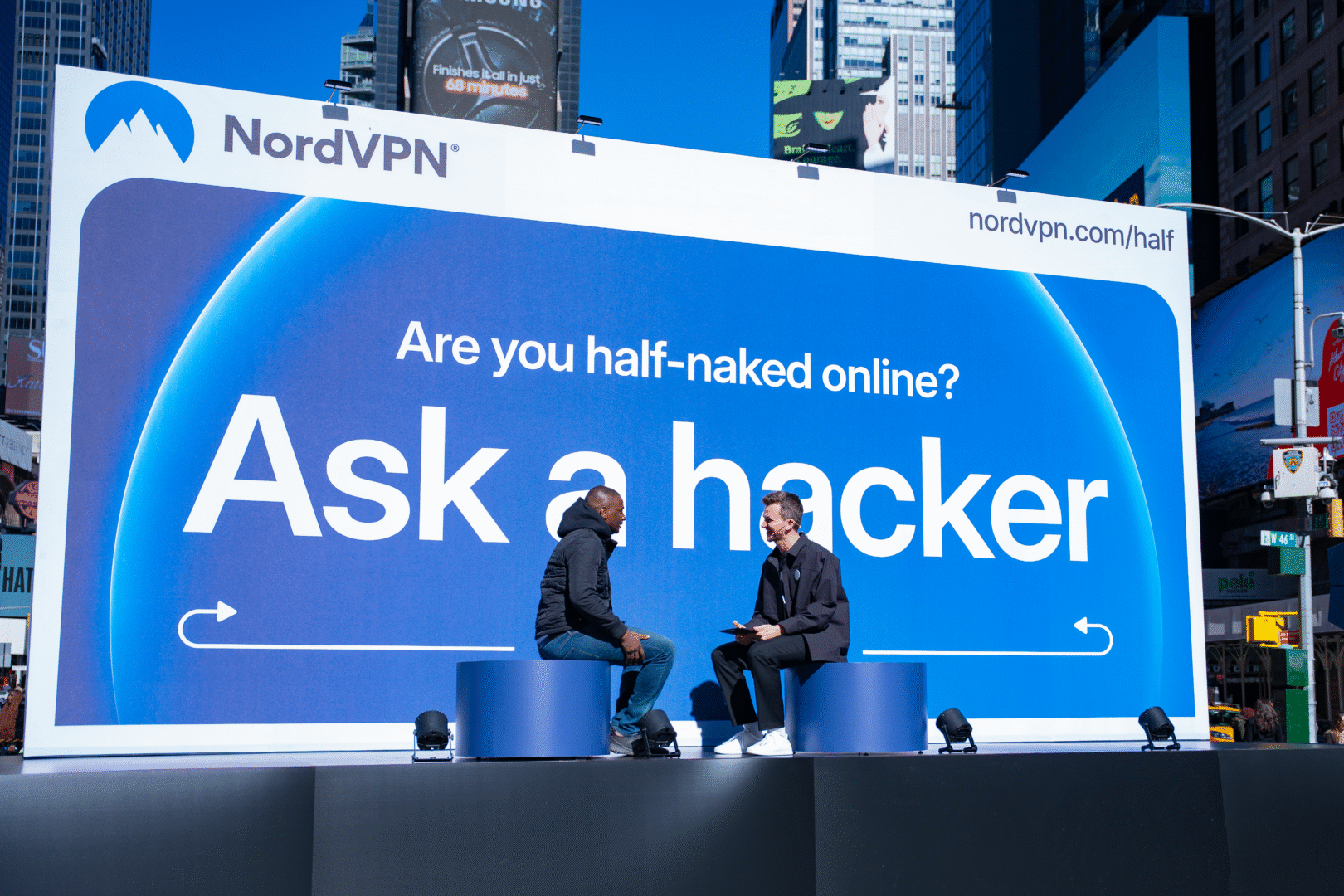
For one of our online campaigns we thought we needed to do something different. So we brought the team, our white-hat hackers and a couple of microphones (among other stuff) to Times Square. Talking about how much data of casual users is already floating around in the dark web is important, but users often don’t realize the scale of the problem. So we asked bystanders to join the stage and tell us only their email address. Using only that, our white-hat hackers were able to scan the dark web and tell a lot about those volunteers on the stage. Reactions speak for themselves. And it showed how important topics get increasingly more impactful when we put the spotlight on the users themselves. When your technology is complex, don’t simplify the tech – simplify the emotion. Make the problem impossible to ignore.

How to turn boring into engaging?
So, how does any tech firm dealing with serious products like security, infrastructure, or finance approach this storytelling problem? There is no one universal answer, but a few of these steps might help put you on the right track:
- Find the human truth
Don’t look at your features; look at the person using them. Atlassian found humor in workplace miscommunication. Lingokids found guilt in parenting. NordVPN found a lot of dropped jaws on the stage’s floor after telling people information that they thought was secure. Your product solves a problem, so try focusing on the feeling of that problem being solved, not the technical specs of the solution.
- Embrace the “negative”
Is your industry complex? Scary? Tedious? Don’t hide from it. Acknowledge the friction. When you validate your customer’s frustration (like the complexity of reading a contract or building a website), you build immediate trust. Vulnerability is a superpower in B2B marketing.
- Take risks with tone
You can be serious about your technology and still be playful with your brand. If you aren’t a little bit afraid that a campaign might be “too much,” you probably aren’t pushing hard enough.
- Authenticity in the age of AI
Finally, a note on the current landscape. As AI tools become universal, “perfect” content is becoming a commodity. What stands out now, or, well, always have is authenticity. Real stories, real humor, and campaigns that feel like they were crafted by humans for humans – even if with AI’s help.
There is no such thing as a boring product – only missed opportunities to connect. Let’s stop hiding behind the specs or our category and start telling better stories.
Read more like this
-
Marketing
April 26, 2024•10 mins read
Getting the most out of your marketing: Performance marketing for your early-stage startup
-
Marketing
October 4, 2023•6 mins read
When to imitate and when to innovate: Marketing for your early-stage startup
-
Marketing
August 25, 2022•5 mins read
3 super-practical tips startups need to know from an influencer marketing expert
-
Marketing
August 9, 2022•6 mins read
Growing globally? A marketing expert explains why influencer marketing is the perfect channel