One year after launching Tesonet Foundation with an initial commtment of €1 million, Tesonet continues to strengthen its long-term approach to philanthropy through strategic partnerships, measurable impact and sustained investment in Lithuania’s future.
Established to bring together and expand Tesonet’s philanthropic initiatives under one dedicated organization, the Foundation focuses on three strategic areas: education and future talent development, strengthening societal resilience, and empowering athletes. Rather than supporting one-off initiatives, Tesonet Foundation seeks to build long-term partnerships that create lasting, measurable change.
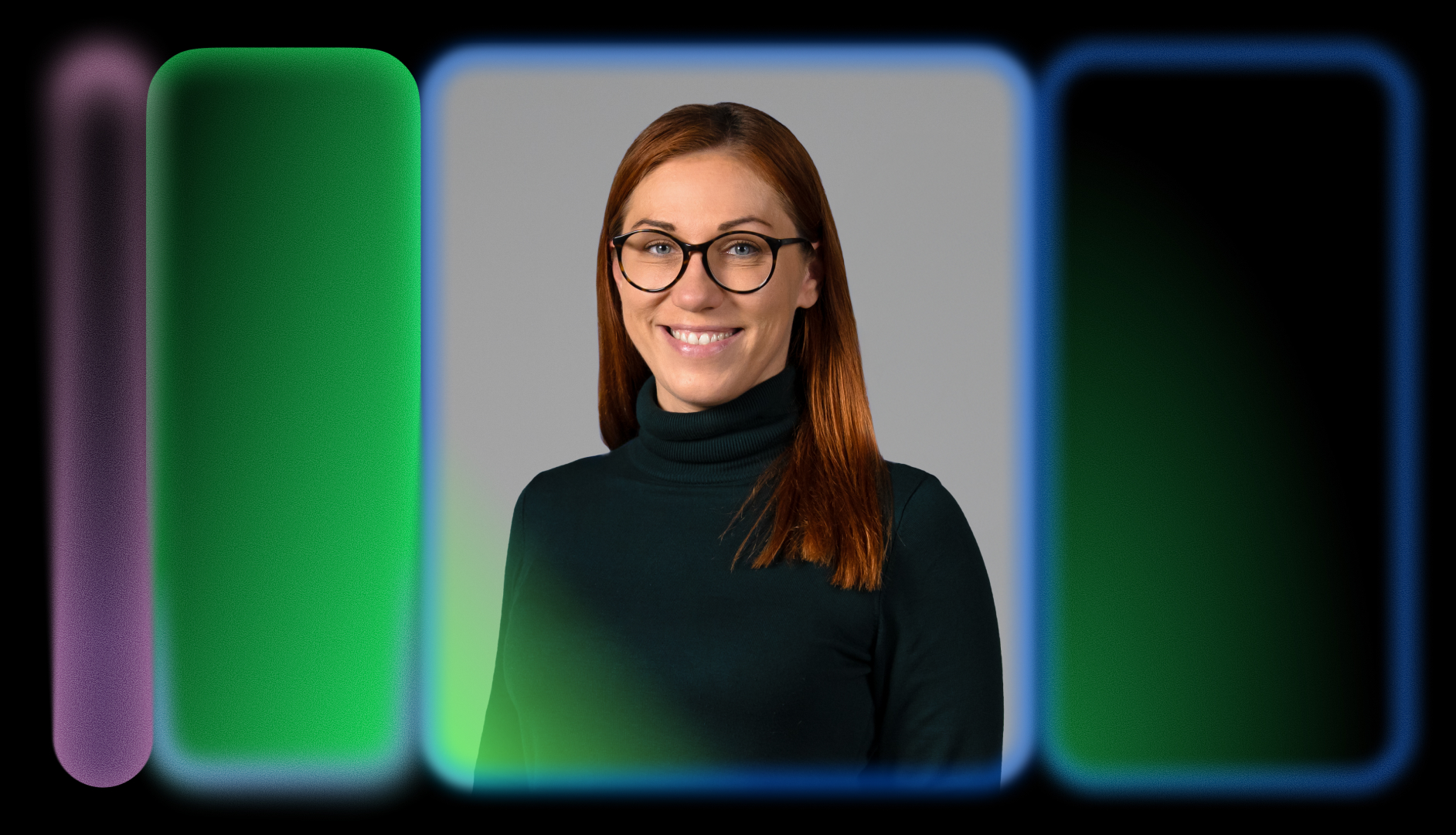
To mark the Foundation’s first anniversary, 15min, one of Lithuania’s leading news outlets, spoke with Simona Laiconaitė, Director of Tesonet Foundation, about the Foundation’s philosophy, why philanthropy should be measured by the change it creates rather than the amount donated, and how businesses can play a meaningful role in building a stronger society.
– Let’s start with a simple question: how does Tesonet Foundation differ from dozens of other foundations in Lithuania?
It is easy to imagine that you give away a large sum of money, feel that you have contributed to something, and consider your job done. Then you present nice numbers: how many children attended extracurricular activities, how many classrooms received new computers, how many events were organized. It looks good, it is measurable, and it usually becomes the main success story of foundations.
But the real question is different — what came out of it? What actually changed because we contributed? From the very beginning, Tesonet Foundation wanted to be built around exactly this question. Not just to support, but to understand whether support truly creates the change we are aiming for.
This means a completely different working model: longer preparation before decisions, deeper understanding of the organizations we support, and a clear agreement in advance on which indicators we will track together.
The second difference is focus. In Lithuania there are many excellent foundations, each choosing its own path. We deliberately chose not to spread ourselves thin across many areas, but to focus on three directions: developing future creators and education, strengthening resilience, and empowering athletes. These are choices that come from our DNA — from what the group has already done, what it understands, and where we believe we can create the greatest value.
And the third element is long-term thinking. We do not want to be a foundation that changes priorities every year depending on trends or the public agenda. We want to look back in five or ten years and clearly see what change we have made in the areas we chose.
– Still, the Tesonet group supported various initiatives even before the foundation was established. Why was a separate structure needed?
Previously, support was distributed in many different ways — financially, through computer classrooms, products, equipment, and partnerships with universities. These were sincere, good initiatives, but they were fragmented — driven by urgent needs, situations, and what was relevant at the time.
A separate structure allows us to operate differently. It creates a clear mandate, a team that thinks every day about how to create impact, and discipline — the ability to pause, evaluate, and choose.
In addition, the foundation becomes not only a tool of the company group, but an independent player in the philanthropy field, capable of building long-term partnerships with organizations that understand we are here for more than one year.
– “Proven social impact” is a concept increasingly heard in Lithuanian philanthropy, but still rare in practice. What does it mean to you?
For me, “proven social impact” starts with a question: how do we know that we are truly solving a problem, rather than just feeling that we have done something good?
We usually have data about the problem itself, but far less often do we actually measure whether our actions reduce it. One thing is responding to a crisis today, but another — no less important — is making sure such crises become less frequent in the future.
We need to work on both levels: help where there is pain today, and at the same time look for ways to prevent that pain from repeating.
We set ourselves a concrete ambition that 70–80% of all supported initiatives should have a measurable impact. For a young foundation, this is an ambitious goal, but I believe it is achievable if from the very first partnership we agree with organizations on which change indicators matter and why.
I would very much like impact measurement in Lithuanian philanthropy to become not an additional requirement, but a natural part of the process — as standard as providing support itself.
– These are three different things that are often mixed into one. Social responsibility is the broadest term. It covers many everyday decisions: how an organization takes care of its employees, how it reduces its environmental impact, and what internal standards it applies. This is part of responsible business practice, but it is not philanthropy.
Philanthropy begins when an organization shares its resources with those outside its own boundaries. And those resources are not only money. They can be technology, knowledge, people, partnerships, or contacts. In a broad sense, philanthropy is giving back to society — a thoughtful act of sharing.
And it is important to say that philanthropy does not necessarily need to be measured like an investment or calculated through return.
Impact investment, on the other hand, is a very deliberate choice to strengthen specific areas and measure return — through better education outcomes, a stronger economy, greater resilience, and so on.
– Is this distinction understood in the public space in Lithuania?
I don’t think so yet. Business often labels as philanthropy what is actually corporate social responsibility, or the other way around.
This matters because it affects what we expect from business and how we evaluate it.
– This year, the list of initiatives you support has grown significantly: €100,000 for MO Museum’s critical thinking program, €100,000 for the investigative journalism award “Pamatai”, €100,000 for “Vedliai” teacher AI literacy program. What connects these initiatives?
Critical thinking, informational resilience, and the ability to work with new technologies — these are competencies without which it is difficult to talk about a resilient society today.
Although approached from different angles, all three partnerships work in this same space.
I am personally very happy about the MO Museum partnership — Toma Sabaliauskienė has joined the museum’s board, so we can follow the process very closely.
In the sports area, we plan more focused support for talents who already show clear potential to become top-level athletes but lack funding to properly prepare and compete.
– Sport. It seems the simplest and at the same time the hardest area to measure. What are you trying to solve there that education does not?
Sport provides what education alone does not fully solve. Through sport, a person learns discipline, responsibility, self-confidence, teamwork, and the ability to handle pressure. These are skills that last a lifetime.
Regardless of whether a person continues in professional sport or not, sport often becomes a place where young people find community, support, and direction.
A coach becomes an authority figure, a team becomes a second home, and regular rhythm provides structure that some children lack.
Sometimes this is exactly what helps them escape an unfavorable environment and provides more stability than any other activity could.
There is also the talent pathway. We are used to seeing the majority of support going to popular sports. But there are many disciplines and talented people who remain unseen simply because their sport is less visible.
We want these athletes to have real opportunities to grow, not be left aside just because their sport is not in the spotlight.
For us, sport is about health, discipline, community, and creating conditions for talent to grow and compete globally. All these elements are equally important.
– A question many foundation leaders fear: what do you do when you see an initiative is not working?
So far we have not had such a situation. This is partly because we do not allocate support impulsively.
In my view, foundations should abandon the illusion that they know best how to “fix” education, healthcare, or other complex systems.
There are people and organizations that have worked in these fields for decades, understand the complexity, and can best identify where attention should be directed.
Trust in partners is critical.
– There are more and more philanthropic foundations in Lithuania every year. What does that tell you about the country?
The growing number of philanthropic foundations reflects the maturity of society and the state.
In less mature societies, business is often still seen as something that takes rather than gives back — something that must be reminded of its responsibility rather than seen as a natural contributor to public good.
In more mature societies, the picture is different: business takes broader responsibility and sees its role not only in the economy but also in shaping education, culture, and healthcare.
Lithuania, in my view, is currently at a very interesting stage.
In recent years, many new foundations have been established, and this is not accidental. It shows that our business sector is growing not only financially but also in values.
More and more leaders are thinking not only about the next quarter or profit margin, but about what kind of Lithuania they want to see in 10 or 20 years.
At the same time, this brings responsibility. As the number of foundations grows, the question arises of how we collectively build a high-quality philanthropy culture — not as separate projects, but as a network that strengthens itself.
I want to believe Lithuania is moving exactly in this direction, and this is one of the clearest signs that we are maturing not only economically, but as a society.